
In recent years, educational institutions have been relentlessly targeted by cyber-attacks, with hypervisor vulnerabilities standing out as one of the most critical risks. As remote learning has proliferated, the IT landscape in academia has expanded rapidly, introducing new vulnerabilities. Hypervisors virtualize servers, networks, and applications. They help universities manage growing online users and services. However, as hypervisors consolidate multiple virtual machines (VMs) on a single server, they create high-value targets; compromising one hypervisor can potentially expose every virtualized asset it manages.
Hypervisors offer flexibility, scalability, and efficient resource use, making them indispensable for universities looking to centralize operations and cut IT costs. But they also represent a critical attack vector for ransomware. Once attackers gain access to the hypervisor, they can infiltrate multiple VMs at once, allowing ransomware to spread across systems in seconds, causing widespread operational and data security impacts.
Scope of Ransomware in Education
In 2025, educational institutions remain vulnerable. Ransomware rose 69% in Q1 compared to Q1 2024. These attacks often exploit compromised credentials, unpatched systems, or phishing emails. Alarmingly, over 65% of universities lack even basic email security configurations, making it easier for attackers to breach initial defenses and move laterally within the network through the hypervisor.
Why the Education Sector?
So, what makes the education sector such a prime target? Universities hold sensitive data and run vast networks. Budget constraints make them easier prey.
Sensitive Data
From enrollment to graduation, universities take in a plethora of data about students, alumni, faculty, and staff. They often store Social Security numbers, addresses, health records, and banking details. However, hackers can hold this personally identifiable information for ransom, use it for identity theft, or sell it on the dark web if left unprotected.
In May 2025, attackers re-extorted data tied to the 2024 PowerSchool breach. Districts faced exposed data, outrage, and lasting operational damage. Despite a ransom payment and promises that stolen data was deleted, millions of sensitive records—including Social Security numbers, medical information, and grades—remain unsecured, and attackers have resumed extortion attempts directly against individual schools.
Expanded Attack Surface
Another factor increasing risk is the multitude of devices connecting to educational networks. Students and staff use laptops, phones, and tablets to access apps. Any device can become an entry point. Given the hypervisor’s role in managing these virtualized connections, it becomes an attractive focal point for threat actors aiming to compromise multiple endpoints in a single attack.
The latest MITRE ATT&CK v17 framework validates this growing trend, introducing a matrix full of ESXi TTPs—reinforcing the need for proactive hypervisor security like virtual patching for ESXi vulnerabilities and advanced application filtering to mitigate these evolving threats before they can be exploited.
Limited Budgets
Adding to the sector’s vulnerabilities, budget limitations often prevent universities from implementing adequate cybersecurity protections, leaving systems under-defended. Cybersecurity often gets 3–12% of IT budgets. That is rarely enough to address hypervisor threats.
The Fallout of Ransomware in Education
Ransomware attacks targeting hypervisors have severe operational, financial, and reputational consequences:
- 67% of affected institutions paid ransoms to restore their data.
- $4.02 million: the mean cost of a ransomware incident in higher education in 2024, nearly quadrupling from the previous year.
- 6.7 million records compromised between 2018 and mid-2023, resulting in an estimated $53 billion in downtime.
Beyond financial losses, these attacks have a lasting psychological impact. The exposure of sensitive student, staff, and parent data erodes trust, leaving victims feeling betrayed by the very institutions meant to protect their privacy—as demonstrated by the fallout from the PowerSchool breach.
How Educational Institutions Can Strengthen Hypervisor Security
Fortunately, ZeroLock® offers a dedicated solution to protect against the type of ransomware that can devastate educational institutions. Built to secure hypervisors from ransomware, ZeroLock provides:
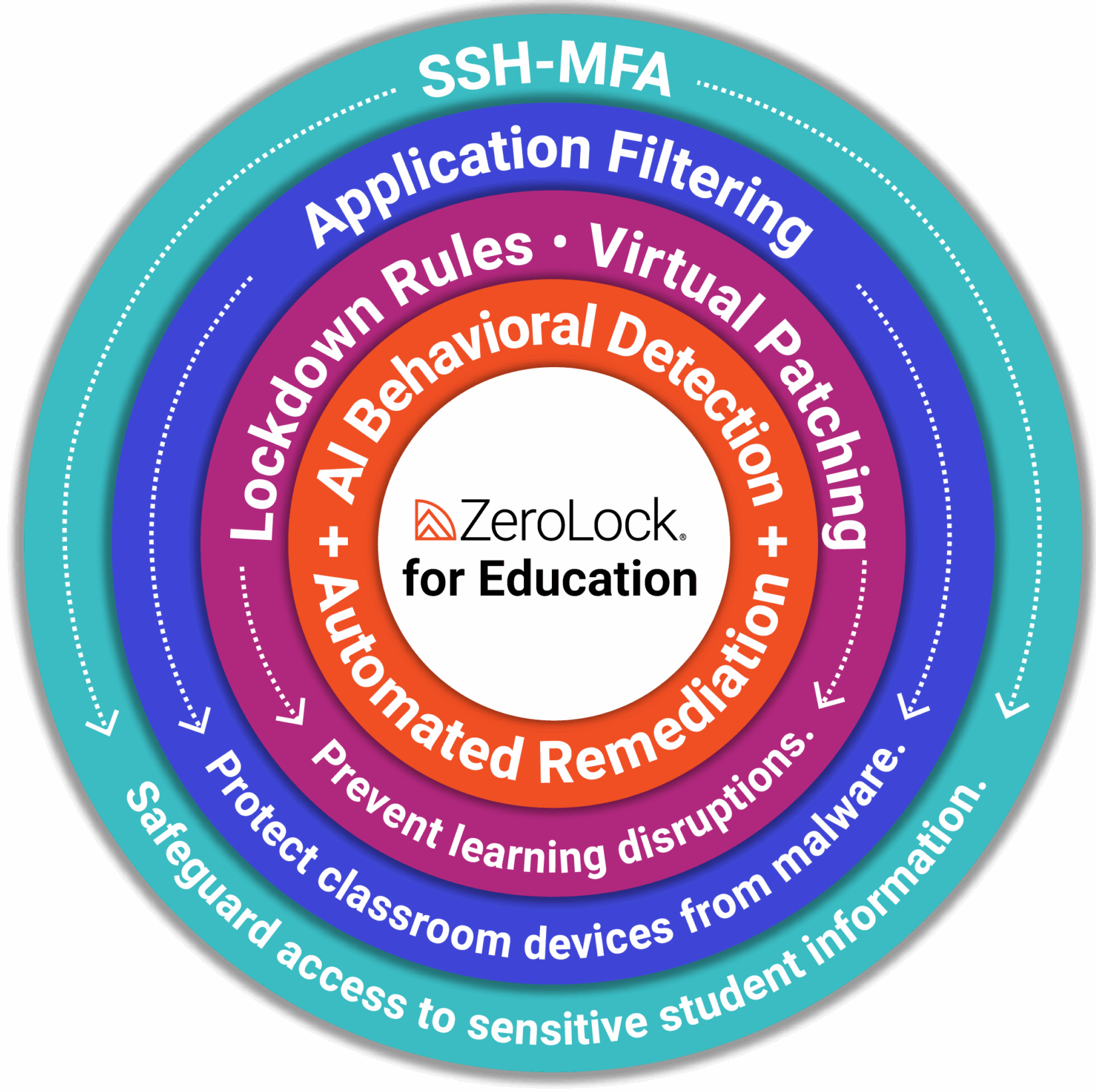 SSH Multi-Factor Authentication to secure remote access
- Application filtering to block unauthorized software
- Lockdown rules & virtual patching to mitigate vulnerabilities—including 100% of the latest MITRE ATT&CK v17 ESXi TTPs
- AI Detection to identify threats in real time
- Automated rollback to minimize downtime and reduce data loss
For institutions with limited budgets, ZeroLock delivers a comprehensive and cost-effective approach to hypervisor protection—helping schools safeguard critical systems and sensitive data across their networks.
Final Thoughts
As education grows increasingly digital, hypervisor security is a defense measure as well as a foundation for sustaining trust and operational continuity. Overall, cybersecurity must evolve as swiftly as the risks themselves, ensuring that academic environments stay safe, connected, and focused on their mission: to foster learning without disruption.